Anime T-Shirt Design Bundle: Graphics & T-Shirt Designs Review
When I first opened the Anime T-Shirt Design Bundle folder, I immediately recognized a set of files built for sellers who thrive at the intersection of pop culture fandom and commercial creativity. The collection delivers a mix of color, white, and black variations that give a merchandise maker plenty of compositional breathing room. There is a playful, bold energy here rather than a minimalist or rustic mood, and that matters if you are building a product line around expressive apparel, sticker sheets, or digital download packs. The visual personality leans animated and contemporary, with strong silhouettes and contrasting elements that will catch the eye of a buyer scrolling through a crowded Etsy shop or print‑on‑demand catalog. This is not a delicate or feminine bundle; it is designed to spark quick visual recognition, which is exactly what you want when positioning items for anime enthusiasts, convention merchandise, or gamer gift runs.
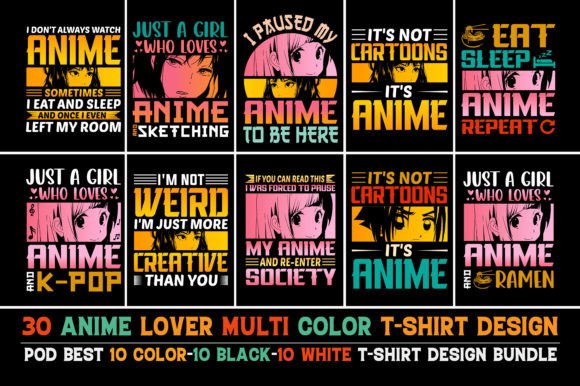
For anyone testing new graphic design assets in a live online store, the first question is always whether the artwork can bridge personal expression and repeatable commercial use. The Anime T-Shirt Design Bundle feels built for that crossover. The inclusion of 30 individual motifs across three background‑ready colorways means you are not simply buying a single illustration but receiving a mini collection that can be adapted into seasonal bundles, limited‑run hoodies, or themed digital product kits. I immediately thought about the kind of small business owner who launches new tee campaigns every few weeks and needs a cohesive drop that still offers enough variety to fill a listing series without looking repetitive.
Testing the Anime T-Shirt Design Bundle for Real Product Collections
Imagine a print‑on‑demand seller preparing a back‑to‑convention merchandise refresh. They need fresh t‑shirt designs, coordinating mug graphics, and a few quick‑turn digital download elements for sticker makers. This is exactly the kind of scenario where the Anime T-Shirt Design Bundle starts proving its usefulness. Instead of pulling art from multiple sources and praying the styles visually connect, you have a consistent set of files type — PNG, SVG, and EPS — that you can drop into your design workflow at once. I loaded the PNG versions onto a variety of product mockups to see how the colors translated against different substrates.
The color PNGs held their saturation well on light‑colored apparel, while the white variants became the standout option for dark tees and black tote bags. Having a dedicated black version of each design may seem redundant until you realize how often you need a high‑contrast graphic for a light mug or a crisp sublimation pillow without a visible bounding box. That small organizational touch saves time when you are trying to batch‑produce listing images or give a Cricut user clean cut‑ready visuals. In SVG form, the designs imported into cutting software with minimal node cleanup, though I always recommend a test cut on everyday vinyl before committing to a full product run.
I also dropped the graphics into digital download product formats — scalable Canva template frames, printable planner sticker pages, and clipart bundles for blogger media kits. The transparent PNG backgrounds merged smoothly without ugly white halos, which is a non‑negotiable technical requirement when you plan to sell the same asset as a printable design or a social media template component. Whether you sell finished physical products through a Shopify store or offer commercial design assets on Creative Fabrica, the file organization here gives you immediate prototyping flexibility.
Where These Graphics Shine in a Commercial Setup
Sellers frequently overlook the fact that a single well‑chosen illustration bundle can influence product presentation as much as the product itself. If you are new to advertising downloadable assets, the Anime T-Shirt Design Bundle helps with narrative product staging. Imagine a thematic mockup scene: a black hoodie showcasing a white version of the graphic, a coordinating tumbler wrap using a cropped color section, and a phone case preview repeating the same character silhouette in a different tint. That kind of visual storytelling builds perceived value and makes a cohesive product collection feel deliberately designed rather than randomly assembled.
This bundle performs best when used as the dominant visual focus. It suits large product previews, decorative layouts for poster prints, and hero images on digital download listing pages. If you sell sublimation designs for fabric panels or wall art, the crisp EPS files let you scale without worrying about pixelation in print‑ready dimensions. I would not, however, relegate these graphics to an afterthought element in a heavily text‑loaded piece. The bold illustration style benefits from clear headroom, which means a simple sans serif title above or below the art often works better than surrounding it with numerous competing decorative details. In a marketplace thumbnail, that clean composition quickly communicates what a buyer is actually paying for.
How to Avoid Common Pitfalls with Digital Design Assets
Enthusiasm sometimes pushes sellers toward using every available design in one frantic bundle listing, but that risks diluting both visual hierarchy and customer trust. The Anime T-Shirt Design Bundle is strong, but it needs context. I experimented with tiny preview crops for sticker designs printed at two inches, and the finest line details lost some clarity under heavy ink saturation, especially on uncoated paper surfaces. For Cricut projects where the cutting blade must trace an exact path, some of the more intricate contours need slight simplification or a slightly larger finished size to ensure reliable weeding. This is not a design flaw; it is a practical consideration for crafters who sell physical sticker sheets and iron‑on decals.
Other caution areas include forced contrast situations. When placed on a dark gray sweatshirt, the black graphic variant disappears, and even the color version can look muddy if the apparel texture is too coarse. For product listings on platforms like Etsy, always test your final mockup thumbnail at a small scale to confirm the silhouette reads clearly. I also found that loading too many design variations into a single carousel image, such as attempting to preview all 30 designs in a cramped grid, created visual clutter and reduced thumbnail appeal. A constrained selection of three to five complementary pieces per preview works significantly better for attracting clicks.
Practical Seller Notes Before You List
Whenever I evaluate a design bundle for resale potential, I run through a standard checklist that saves me from customer service headaches later. Print a sample at final size on your target material, even if that means a one‑off heat transfer or a printed sheet from a home printer. This gives you a true baseline for color accuracy, because the bright on‑screen hues of the Anime T‑Shirt Design Bundle may shift when printed on polyester versus cotton. I also open every SVG in a vector editor and zoom into the node structure, checking for hidden duplicate paths or open paths that can confuse a cutting machine. In this case, the SVGs were generally clean, but a few complex designs benefit from a quick simplify command depending on the speed of your cutter.
File resolution for the PNGs is generous enough for standard apparel decoration and most sublimation applications. If you are selling digital design assets rather than physical goods, include both the color and monochrome versions in your compressed download folder with easy‑to‑scan naming conventions. From a marketplace listing perspective, I tested pairing the graphics with different font families: a condensed sans serif font gave the designs a modern streetwear feel, while a soft handwritten font pulled them toward a more casual planner‑sticker aesthetic. The bundle does not lock you into one visual voice, but you must consciously choose your typographic pairing so the final product image remains intentional.
Commercial licensing is another step I never skip. Before you sell finished t‑shirts, sublimation mugs, or printable party invitations using these graphics, verify the terms allow your intended use, especially for print‑on‑demand fulfillment. Bundled commercial rights often expect you to create a new, altered product rather than reselling the raw files unchanged. Organizing your final product folder with a clear license summary can protect your store and reassure customers who ask how they may use your creations.
The Visual Personality That Drives Click‑Throughs
In an overcrowded digital product landscape, visual personality makes the biggest difference between a slow shop and a product people remember. The Anime T‑Shirt Design Bundle possesses a readable, energetic persona that lands squarely in a pop‑culture enthusiast niche. It appeals to an audience already looking for merchandise that expresses fandom without being niche‑obscure — the kind of buyer who browses convention booths, subscribes to anime artist Patreons, and buys birthday gifts for a fellow manga fan. That purchase intent alone can improve your conversion rate, provided your listing tags, description, and category placement align with that buyer’s search behavior.
For platform sellers, this graphic style also works well as social media graphics when you announce a new shop collection. A single striking character illustration reposted to Instagram or pinned on Pinterest can pull curious visitors toward your digital product listing or apparel storefront. The white‑background version is particularly useful for transparent PNG badges on blog posts, YouTube thumbnails, or even packaging design sample videos where you want a bold focal point without a boxed‑in look. From a brand identity perspective, having a cohesive illustration pack means your small business branding stays consistent across printing, posting, and promotion.
Building a Professional Product Line Around Anime Graphics
One substantial advantage of the Anime T-Shirt Design Bundle is how easily it anchors a collection. If you are a creative entrepreneur preparing a mass‑appeal drop for a print‑on‑demand site, consider structuring your collection around two or three design motifs from the bundle and adapting each across product types: one artwork becomes a t‑shirt design, a tote bag print, a phone case graphic, and a social media template asset. That strategy creates a recognizable product grouping that customers can shop as a set, which often increases average order value.
Digital product creators who sell clipart bundles or sublimation design kits should consider packaging a selection of these graphics alongside complementary textures, digital paper packs, or journal cards to form a broader creative marketplace product. A well‑organized download of 30 designs can be the star of a larger printable planner kit or a scrapbooking collection, especially when you provide a preview page showing how the white and black variations layer over different backgrounds. For Canva templates, embedding the graphics as pre‑linked elements simplifies the user experience and reduces the number of customer messages asking for technical help. Always check how the design scales down in a planner sticker sheet; keep the most intricate line work for larger formats and reserve simpler silhouettes for tiny stickers or patch designs.
After fully testing prototype items, building sample mockups, and comparing the bundle against competing graphics in my digital arsenal, I find the Anime T-Shirt Design Bundle to be a practical, execution‑ready resource rather than a speculative art experiment. It fits naturally into a workflow that prioritizes variety, brand consistency, and rapid product staging. For sellers who understand their niche, it can become the creative backbone for a profitable merchandise series, a digital download collection, or a themed seasonal release.